


Lab-Grown Diamonds Explained: HPHT, CVD, and the Difference from Moissanite
Introduction
Every diamond begins with light.
Today, advanced technology has created a modern way to produce diamonds with the beauty, brilliance, and durability people have long admired.
But what exactly is a lab-grown diamond? How do HPHT and CVD work? And how is a lab-grown diamond different from moissanite?
Here is a clear introduction to the diamonds at the heart of DIAMLUME jewelry.
What Is a Lab-Grown Diamond?
A lab-grown diamond is a diamond created in a controlled technological environment rather than extracted from the earth.
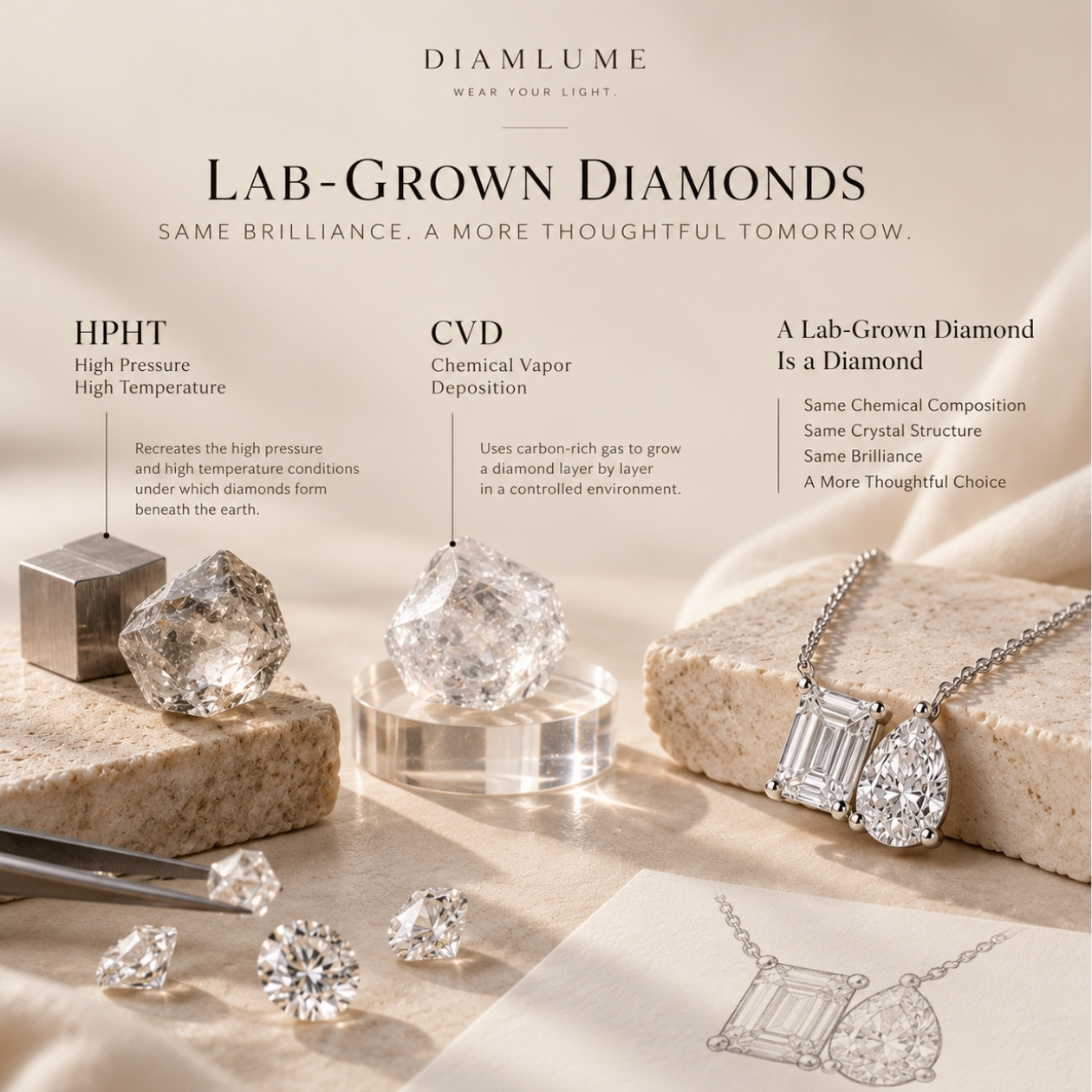
Like a mined diamond, it is made of crystallized carbon and has essentially the same chemical composition, crystal structure, optical properties, and physical characteristics associated with diamond.
The principal difference is origin:
- Mined diamonds form beneath the earth over an extremely long geological period.
- Lab-grown diamonds are created using advanced technology in a controlled environment.
Lab-grown diamonds are not imitation diamonds. They can be cut into the same shapes and set into fine jewelry using the same types of craftsmanship applied to mined diamonds.
How Are Lab-Grown Diamonds Created?
Lab-grown diamonds begin with a small diamond seed.
Advanced technology creates the conditions necessary for carbon to develop around that seed, gradually forming a larger diamond crystal. Once the growing process is complete, the rough diamond is carefully evaluated, cut, and polished to reveal its brilliance.
There are two primary methods used to create gem-quality lab-grown diamonds: HPHT and CVD.
What Is HPHT?
HPHT stands for High Pressure High Temperature.
This method recreates some of the key conditions associated with diamond formation beneath the earth. A diamond seed and a carbon source are placed inside a specialized chamber and exposed to intense pressure and heat.
Under these controlled conditions, carbon crystallizes around the seed and forms a diamond.
After growth, the rough diamond is removed from the chamber before being cut and polished for use in fine jewelry.
What Is CVD?
CVD stands for Chemical Vapor Deposition.
In this process, a thin diamond seed is placed inside a controlled chamber filled with carbon-containing gas. Energy activates the gas, releasing carbon atoms that accumulate on the seed.
The diamond crystal grows layer by layer until it is ready to be removed, evaluated, cut, and polished.
Although the process differs from HPHT, the result is still a laboratory-grown diamond.
HPHT vs. CVD: Is One Better?
HPHT and CVD describe how a diamond was created. One method is not automatically better than the other.
Both methods can produce beautiful, high-quality diamonds. The growth process alone does not determine the beauty of the finished stone.
What matters most is the individual diamond—its cut, proportions, appearance, and how it interacts with light.
For the wearer, the more meaningful question is not simply whether a diamond was created through HPHT or CVD. It is whether the finished piece reflects their style, story, and individuality.
Lab-Grown Diamond vs. Moissanite
Lab-grown diamonds and moissanite may look similar at first glance, but they are fundamentally different gemstones.
A lab-grown diamond is made of crystallized carbon. Moissanite used in jewelry is generally laboratory-created silicon carbide.
Moissanite is often described as a diamond simulant because it can resemble a diamond, but it does not have the same chemical composition, crystal structure, or optical behavior.
Moissanite may also display more pronounced rainbow-colored flashes under certain lighting, while a well-cut diamond offers its own balance of brightness, contrast, and fire.
Both can be beautiful, but they are not interchangeable:
- A lab-grown diamond is a diamond with a laboratory origin.
- Moissanite is a different gemstone that resembles a diamond.
Clear product descriptions are important so that customers understand exactly what they are choosing.
Why DIAMLUME Chooses Lab-Grown Diamonds
At DIAMLUME, choosing lab-grown diamonds is part of our vision for modern fine jewelry.
We believe luxury should not be defined by origin or rarity alone. It should also be shaped by intention, thoughtful design, skilled craftsmanship, and the meaning a piece carries for the person who wears it.
Lab-grown diamonds allow us to embrace modern innovation while preserving the brilliance and enduring beauty associated with diamond.
They also keep our focus where it belongs: on creating jewelry that feels personal, refined, and connected to the wearer.
A meaningful piece is more than a diamond or a collection of specifications. Its proportions, setting, comfort, craftsmanship, and connection to your story all matter.
DIAMLUME provides an individual IGI grading report for each lab-grown diamond of 1.00 carat or above.
Wear Your Light
Whether created through HPHT or CVD, a lab-grown diamond begins with technology and precision.
But that is only the beginning of its story.
Its meaning comes from the moment it represents, the confidence it reflects, and the person who chooses to wear it.
A diamond captures light.
You give it meaning.
DIAMLUME. Wear Your Light.